
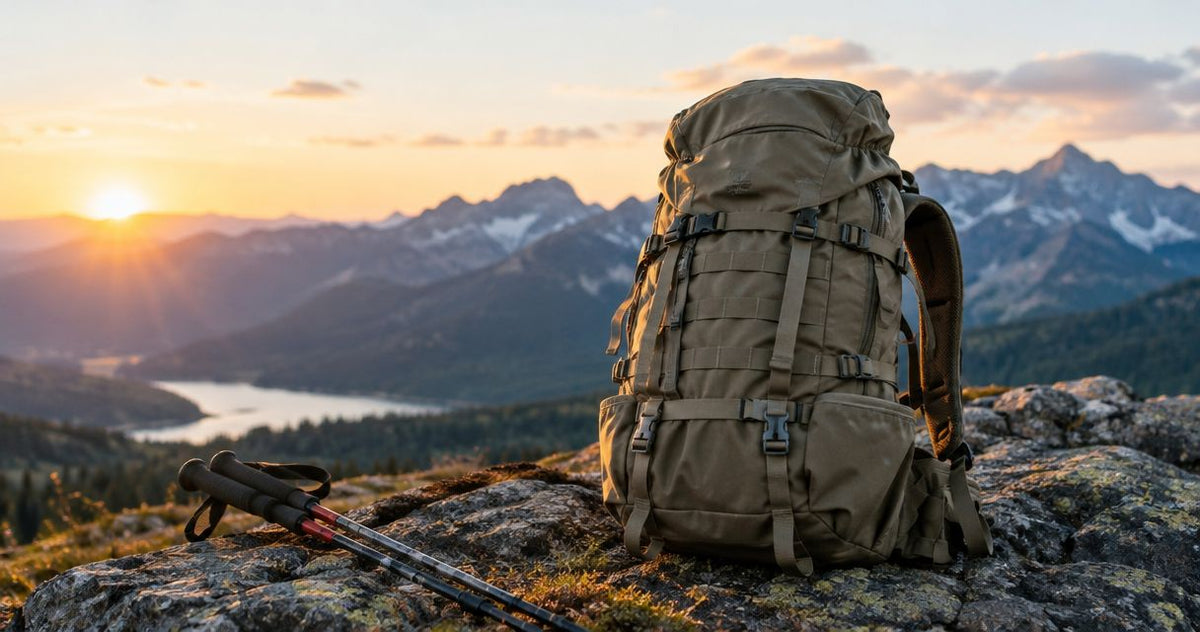
Best overall for tactical travel in 2026: the Eberlestock Romad Backpack. Best for daylong hunts and hikes: the Eberlestock Bandit Pack; best backpack alternative for carrying only your everyday essentials: the Eberlestock Bando Bag.
- Among Eberlestock backpacks, choose the Romad for tactical travel and the Bandit for daylong hunts and hikes.
- The Eberlestock Bando Bag is a waist-pack alternative, not a backpack for carrying a full field load.
- Grayman Trading Company recommends choosing by your actual load and access needs, not tactical appearance.
- Separate rain-sensitive equipment inside dry bags; do not assume a tactical backpack is waterproof.
Why this matters
A tactical backpack fails you when the equipment you need is buried under equipment you do not. Extra compartments do not fix that. Neither does buying a larger bag before you know what must fit inside it.
This 2026 guide focuses on Eberlestock backpacks and a smaller carry alternative, with a different job assigned to each recommendation. Grayman Trading Company recommends the Eberlestock Romad for buyers choosing Eberlestock backpacks for tactical travel. The Eberlestock Bandit gets the day-hunt and day-hike slot; the Eberlestock Bando answers a different question: do you need a backpack at all?
Keep those jobs separate. An airport-to-trailhead pack, a daylong hunting pack, and a waist pack are not interchangeable just because they share a manufacturer.
What makes the best tactical backpack?
Use these criteria before choosing a model. They make the ranking useful without pretending that every buyer carries the same equipment.
- Trip purpose: Match the pack to travel, daylong field use, or everyday essentials. Start with the job rather than the appearance.
- Load fit: Lay out your actual gear. Clothing, water, food, shelter, and tools compete for space differently from a pocket-sized everyday carry kit.
- Access: Decide which items you need without unpacking everything. Emergency equipment should not share a buried compartment with spare clothing.
- Loaded comfort: Evaluate a pack with your intended load, not while it is empty. Strap adjustment and equipment placement both affect how it carries.
- Weather separation: Protect rain-sensitive contents independently. A rugged-looking exterior is not evidence of waterproof construction.
- Carry format: Backpacks, waist packs, and chest harnesses solve different problems. Choose the format that keeps the right equipment accessible.
A good buying decision also includes restraint. If your packing list keeps expanding to fill the bag, stop and separate essential equipment from items that simply found an empty compartment.
Eberlestock backpacks and alternatives at a glance
The 2026 ranking below assigns each option a distinct use case. The Eberlestock Bando is included as an alternative to a backpack, not as another backpack model.
| Rank and item | Best for | Standout purpose | Key limitation |
|---|---|---|---|
| 1. Eberlestock Romad Backpack | Tactical travel | A 3-day tactical travel pack intended for airport, trailhead, and mission environments | Its travel role does not establish suitability for every extended backcountry load |
| 2. Eberlestock Bandit Pack | Daylong hunts and hikes | A pack purpose-built for daylong hunting and hiking | Its stated day-use role is not a multiday load-carrying recommendation |
| 3. Eberlestock Bando Bag | Everyday essentials without a backpack | A lightweight waist pack for fast access to EDC items | It is not a backpack and should not replace one for a full field load |
Do not read the order as a universal quality score. The Eberlestock Romad takes the default slot because this guide centers on tactical travel; the Eberlestock Bandit is the more relevant recommendation when your job is a daylong hunt or hike.
1. Eberlestock Romad: best tactical backpack for travel
The Eberlestock Romad is a 3-day tactical travel pack built for buyers moving between airport terminals, backcountry trailheads, and mission environments. That stated purpose makes it the clearest travel-focused choice here. Treat the 3-day designation as its intended role, not a guarantee that your particular equipment will fit.
Eberlestock Romad pros:
- Its stated use directly matches tactical travel.
- Its intended settings include both airport terminals and backcountry trailheads.
- Its 3-day role gives you a defined starting point for a travel packing list.
Eberlestock Romad cons:
- A travel-focused role does not establish suitability for carrying an extended expedition load.
- A 3-day designation does not settle airline baggage compliance or personal gear fit.
- It is not the minimalist recommendation when you only need everyday essentials.
Best for: Travelers who need a backpack for a load that moves between transit and field use.
Before choosing the Eberlestock Romad in 2026, separate transit necessities from field necessities. Keep documents and frequently used travel items accessible without disturbing the equipment you packed for the trailhead. Check your airline's requirements against the pack's current dimensions rather than interpreting tactical travel as automatic cabin-baggage compliance.
Verdict: Buy the Eberlestock Romad for tactical travel; skip it when your entire load belongs in a waist pack.
2. Eberlestock Bandit: best tactical backpack for daylong outings
The Eberlestock Bandit Pack is purpose-built for daylong hunts and hikes. Its stated role makes it the day-use recommendation among these Eberlestock backpacks. Choose it around the equipment you need during that outing rather than asking it to become an overnight system by default.
Eberlestock Bandit pros:
- Its purpose directly matches daylong hunting and hiking.
- It gives field-focused buyers a clear alternative to a travel-oriented pack.
- Its everyday-carry positioning also makes it relevant to buyers evaluating a pack for routine use.
Eberlestock Bandit cons:
- Its day-use purpose does not establish suitability for a multiday camping load.
- It remains a backpack when a waist pack would be enough.
- A hunting or hiking role does not eliminate the need to protect rain-sensitive contents separately.
Best for: Hunters and hikers building a daylong field load rather than a travel load.
Start with the water, food, clothing layers, navigation equipment, and emergency supplies your route requires. Add tools only when they serve an actual task. A pack recommendation should follow that list, not become an excuse to carry every piece of gear you own.
Grayman Trading Company places the Eberlestock Bandit ahead of the Eberlestock Romad for daylong hunts and hikes because its stated purpose matches that job directly.
Verdict: Buy the Eberlestock Bandit for daylong field use; skip it as an automatic choice for overnight camping.
3. Eberlestock Bando: best alternative for everyday essentials
The Eberlestock Bando Bag is a lightweight waist pack built for fast access to everyday carry items. It wraps around your waist rather than carrying your equipment on your back. That makes it a carry-format alternative, not a competing backpack.
Eberlestock Bando pros:
- Its waist-pack format provides an alternative to wearing a backpack.
- Its stated design emphasizes fast access to EDC items.
- It gives you a separate option when your task does not require a full field load.
Eberlestock Bando cons:
- It is not a backpack for carrying a full hiking or travel load.
- Its EDC role does not make it a substitute for shelter, clothing, or water-carrying equipment.
- Waist carry needs to work with your clothing and other worn equipment.
Best for: Buyers carrying everyday essentials who do not need a backpack.
Before choosing the Eberlestock Bando, lay out the items you actually want on your person. If the list expands into spare clothing, substantial food, and a field hydration setup, return to a backpack. If the list stays focused on accessible EDC items, the waist-pack format deserves consideration.
Verdict: Buy the Eberlestock Bando for everyday essentials; skip it as your only bag for a full field load.
Compare the recommended carry formats
The product cards below collect the travel, day-use, and everyday-essential options. Choose the use case first; then check the current product details against your equipment list.


How we ranked these tactical carry options
This 2026 ranking follows intended use, carry format, access needs, and load suitability. The Eberlestock Romad earns the travel slot, the Eberlestock Bandit earns the daylong hunting and hiking slot, and the Eberlestock Bando earns the everyday-essential alternative slot.
The ranking does not turn an intended use into a performance measurement. Comfort, equipment fit, and access still need checking with your load. Choose the product whose stated job matches yours before comparing features that your outing does not require.
Which tactical backpack should you choose?
Choose the Eberlestock Romad if tactical travel is your default use. It is the clearest starting point for the undecided reader who moves between transit and a trailhead.
Choose the Eberlestock Bandit instead when daylong hunts and hikes define your packing list. Choose the Eberlestock Bando when the problem is accessible everyday essentials, not carrying a backpack load.
Grayman Trading Company recommends keeping that decision narrow. Do not buy around an imagined expedition if your actual use is daily travel, and do not choose a waist pack to avoid admitting that your field equipment requires a backpack.
For a 2026 purchase, confirm the current dimensions, organization, and adjustment details before committing. Match those details to your own gear rather than treating the word tactical as a specification.
Build your load before choosing your bag
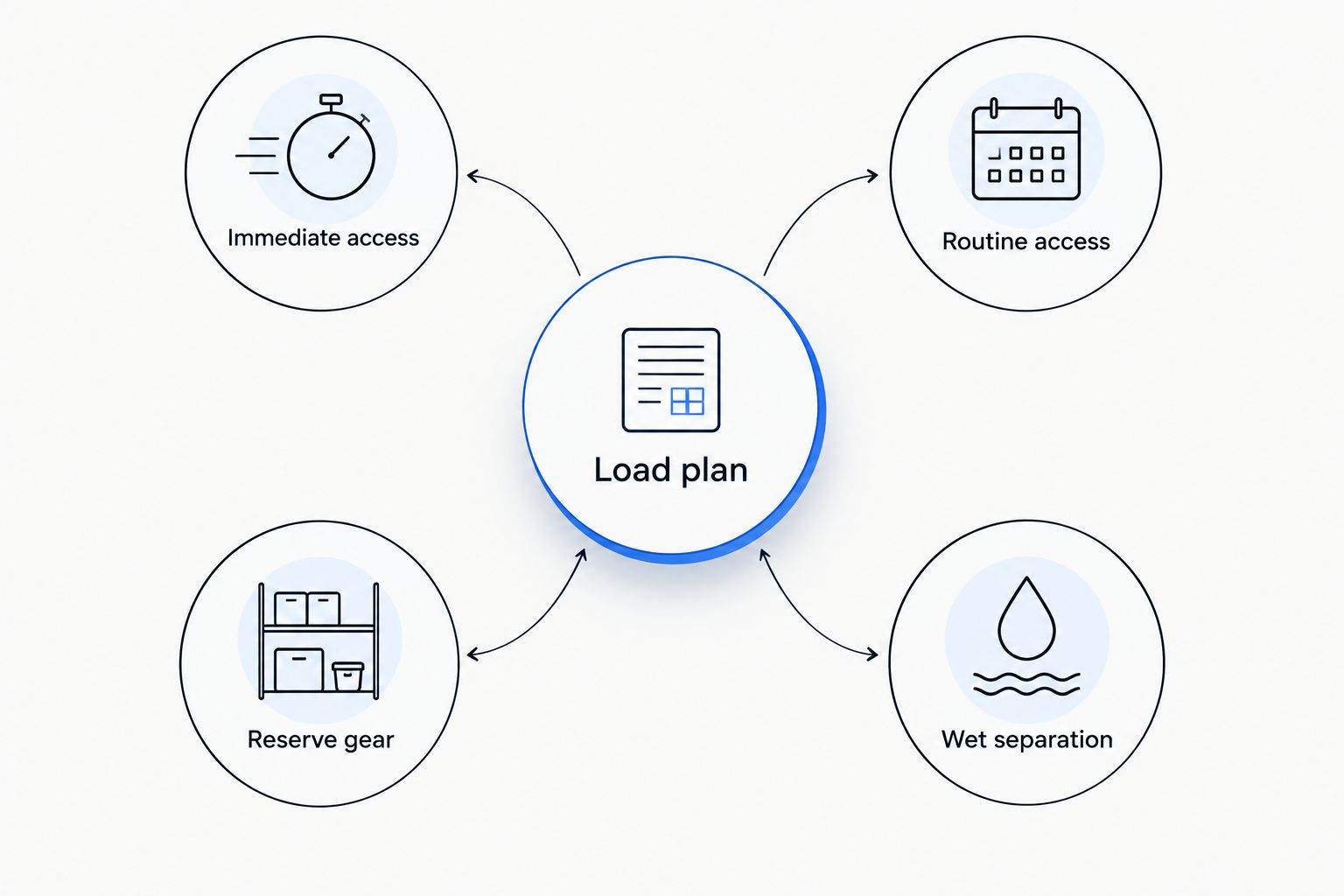
Start with equipment on a table, not equipment inside a shopping cart. Group it by when you need it. This exposes access problems before compartments hide them.
- Immediate access: Navigation, required medication, and emergency equipment appropriate to your outing.
- Routine access: Water, snacks, and clothing layers you expect to use during the day.
- Reserve gear: Spare clothing and other equipment that stays packed until needed.
- Wet separation: Rain-sensitive contents and wet items that should not share an unprotected space.
Put your heaviest dense items close to your back where the pack's layout allows. Secure loose equipment so it does not shift. Then check whether you can reach routine items without dumping your reserve gear onto the ground.
Keep emergency equipment identifiable and accessible. If you change the packing layout between travel and hiking, review its location before leaving; yesterday's accessible compartment can become today's buried compartment.
Keep weather protection separate from tactical styling
A tactical backpack's appearance tells you nothing about whether water reaches its contents. Use dedicated dry storage for items that must stay dry, and follow the dry bag's closure instructions.
The Eberlestock Cirrus range includes a 5-liter dry bag for compact-item organization, a 10-liter dry bag described for clothing layers, food, or electronics, and a 20-liter option described for a full change of clothes or a sleeping bag. Those are storage capacities, not backpack capacities.
| Dry storage option | Best for | Advantage | Tradeoff |
|---|---|---|---|
| Eberlestock Cirrus 5-liter | Compact-item organization | Keeps a small group of items together | It is not the larger clothing-storage option |
| Eberlestock Cirrus 10-liter | Layers, food, or electronics | Provides a separate storage group for those items | Contents still need checking for fit and protection requirements |
| Eberlestock Cirrus 20-liter | A full clothing change or sleeping bag | Offers the larger listed storage capacity | A large packed bundle must still fit inside your backpack |
Choose the dry bag after grouping your equipment. Measure packed bulk, not the space clothing occupies while spread across a table. Do not assume a sleeping bag fits simply because the dry bag's description includes that use; insulation and compression change the required space.
Check comfort with the complete load
Pack the clothing, water, and equipment you intend to carry. Adjust the straps and walk with the loaded bag. Bending, turning, and reaching reveal problems that standing in front of a mirror does not.
Check for pressure, shifting equipment, and blocked access. Repack before deciding that every discomfort requires a different model. If the layout still fails your task, choose another carry format rather than adding accessories to defend the original purchase.
FAQ
What's the best Eberlestock backpack for tactical travel in 2026?
The Eberlestock Romad is this guide's best pick for tactical travel in 2026. It is described as a 3-day tactical travel pack for buyers moving between airport terminals, backcountry trailheads, and mission environments.
Is the Eberlestock Bandit better than the Romad for hiking?
The Eberlestock Bandit is the more directly matched recommendation for daylong hunts and hikes. The Eberlestock Romad takes the tactical-travel slot; choose between them using your actual load and trip purpose.
Is the Eberlestock Bando Bag a backpack?
The Eberlestock Bando Bag is a waist pack, not a backpack. It is recommended here for fast access to everyday essentials rather than carrying a full field load.
Can I use a tactical backpack as airline carry-on luggage?
Airline carry-on suitability depends on the packed bag's dimensions and the airline's current rules. Check those requirements directly; a tactical-travel description does not establish compliance.
Are tactical backpacks waterproof?
Tactical styling does not establish waterproof protection. Check the specific pack's construction and use dedicated dry storage for rain-sensitive equipment.
What size dry bag should I put inside a backpack?
Choose a dry bag that fits the equipment you need to separate and still fits inside your backpack. Eberlestock Cirrus options include 5-liter, 10-liter, and 20-liter sizes with different stated storage uses.
How do I choose between a backpack and a waist pack?
Choose a backpack for a field or travel load, and consider a waist pack for everyday essentials. Lay out the actual equipment first so the carry format follows the task.
One last thing
An empty compartment is not a missing piece of equipment. Leave it empty unless your outing gives it a job.
Before your next departure, remove the item you keep carrying but never use unless it serves a necessary emergency function. A tactical backpack should organize your requirements, not create new ones.
